Huel: The Numbers Behind the €1bn Danone Deal

In March, Danone completed its acquisition of Huel at a price the Financial Times reported at around €1bn. Weeks later, Huel's tenth-year accounts landed at Companies House: revenue up 19% to £254m, pre-tax profit up 40% to £19.4m, and more than 500 million meals sold since launch.
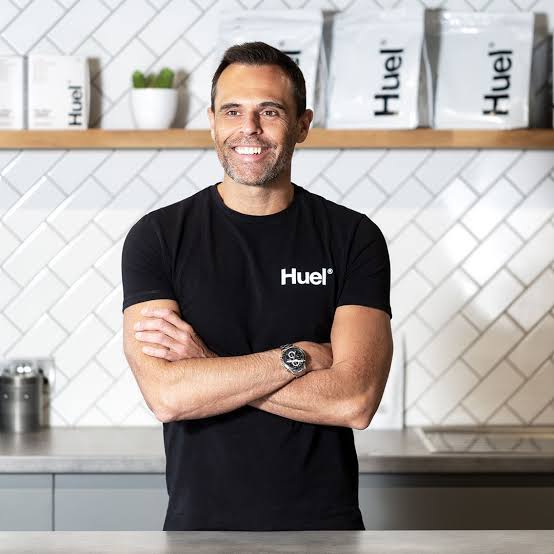
The story everyone tells is the founder's: Julian Hearn, who left school at 16 with virtually no qualifications, launched a beige powder at 43 that the internet mocked, and exited at 55 with a reported £400m. That story is true and we have told it. This is the other half, the one in the filings: how a direct-to-consumer powder brand industrialised itself into something one of the world's largest food companies decided it could not build and had to buy. Every figure here is sourced.
From a failed website
The founding logic matters because it shaped the operating model. Hearn's previous venture, a fitness site called Bodyhack, failed because its results demanded more cooking, planning and discipline than customers would sustain. His conclusion was not a better plan but a better product: engineer complete nutrition into a single item, so the default requires no willpower. Huel, short for Human Fuel, launched in 2015 from Aylesbury with nutritionist James Collier, a product Hearn has described as constructed on a spreadsheet, not in a kitchen.
Two governance decisions early on turn out to matter as much as the product. Hearn largely bootstrapped the early years, taking growth capital from Highland Europe only in 2018 and Morgan Stanley's 1GT climate fund in 2024, keeping majority ownership throughout. And in late 2017, with sales at roughly £20m, he hired James McMaster as chief executive and stepped back from the day-to-day. Under a hired CEO, with the founder holding the majority, the business grew more than tenfold. When the exit came, the ownership structure meant the value had accrued to the person who built it.
The staircase in the filings
Year to 31 July | Revenue | Growth | Pre-tax profit | Notes |
|---|---|---|---|---|
FY23 | ~£184m | £4.7m | Adjusted EBITDA £9.8m | |
FY24 | £214m | +16% | £13.8m | Profit almost trebled; adj EBITDA £18.2m, +86%; UK £110.1m |
FY25 | £254m | +19% | £19.4m | +40%; tenth year; 500m meals |
Look at the shape of the profit line rather than the revenue line. Revenue compounded steadily. Profit inflected: £4.7m to £13.8m to £19.4m in two years. That inflection, not the top line, is what set the price, and it traces to specific operational decisions made in exactly that window.
The channel shift that did not kill the margin
Huel began as the archetypal DTC subscription brand. By the FY24 accounts it had a retail presence in more than 25,000 stores worldwide, up from 11,250 a year earlier, including around 70% of UK supermarkets, with supermarket sales growing to more than a third of a UK business turning over £110m. The US had become roughly 30% of revenue, a $100m business in its own right, alongside 4 million customers across 100 plus countries.
The standard version of this story ends badly: wholesale expansion dilutes DTC margins, retailer terms eat the P&L, and the brand trades profitability for shelf presence. Huel's accounts show the opposite, profit trebling during the fastest retail expansion in its history. The reason is the next section.
The industrialisation
In 2024 Huel opened its own factory in Milton Keynes, taking a one-off £1.3m hit to bring it online, and began manufacturing a significant proportion of its UK and EU volumes in-house. The accounts credit vertical integration directly for improving margins as economies of scale arrived. The logistics layer scaled with it: a GXO partnership expanded dedicated warehouse space to 111,000 square feet, with the fulfilment workforce growing from 43 to 120 people.
And underneath both sits the most quietly clever operational decision in the business: the product architecture itself. Huel's powders are built on neutral flavour bases with separate flavour boosts, meaning the same core SKU becomes vanilla, banana or coffee at the last step. That is inventory efficiency designed into the product: fewer core SKUs to forecast, deeper stock in each, less demand-splitting across variants, and far less capital dying in the slow flavour nobody reordered. It is the same discipline we push in every inventory audit, achieved one level earlier, in the formulation.
Position the margin in the product, industrialise when volume justifies it, and the channel expansion funds itself. That is the sequence the profit inflection is made of.
The multiple, and what it says next to Au
Against £254m of latest filed revenue, a €1bn price is roughly 3.4 times sales. Put that next to the other UK consumer exit of the season: Au Vodka's reported £500m against £82.9m filed, roughly six times. The gap is instructive rather than embarrassing for either side. Au's multiple paid for brand heat and category momentum in ready-to-drink. Huel's paid for infrastructure: a factory, a 25,000-store distribution footprint, 4 million customers, a category-defining position, and a decade of demand data, the things an acquirer genuinely cannot rebuild from scratch. Two different machines, two different multiples, both rational.
There is one more structural difference worth registering. The Au founders' reported £100m plus each includes deferred payments tied to performance. Hearn sold his entire stake. One exit is a handover with conditions; the other is a clean break, available because the business he sold runs on hired management, owned manufacturing and systems rather than on its founder.
The detail almost nobody clocked
The €1bn was earned in the last three filings, not the first seven years.
For most of its life Huel was a growth story with thin profits: £2.2m of profit for the year as recently as FY23. The three years before the exit are when the machine changed, the factory, the retail footprint, the margin inflection, and the price paid reflects the business as it exited that window, not as it entered it. Founders planning an exit tend to obsess over the growth story. Acquirers pay for the profit trajectory, and the trajectory is built in the final few filings, which means the operational work of years three-from-exit to exit is the highest-leverage work in the company's life.
The test
The test now belongs to Danone: keeping a challenger brand's demand engine alive inside a multinational, without the founder, without an earnout, and with a customer base that bought partly because Huel was not a giant food company. Integration is where acquired DTC brands most often lose the thing that was bought. The filings will show, from a distance now, whether the machine Hearn built runs as well without him as it did with him standing back from it.
The operator's lesson
Three things generalise.
Design the inventory efficiency into the product. The neutral-base-plus-boost architecture solved a forecasting and working-capital problem at the formulation stage. Every brand carries some version of this choice: how much demand-splitting your range design creates is an operational decision disguised as a creative one.
Industrialise behind the demand, not ahead of it. The factory came in year nine, after the volumes justified it, and the margin inflection followed within a filing cycle. Vertical integration too early is a fixed-cost trap; too late, a margin ceiling. Huel's timing is the case study.
The founder's seat is ownership, not necessarily the chair. Hearn hired his CEO at £20m and kept the majority. The company 10x'd under management he chose, and the €1bn accrued to him. Control of the equity mattered more than control of the diary.
A failed fitness website, a spreadsheet, a factory in Milton Keynes, and a clean nine-figure exit ten years later. The story is good. The filings are better.